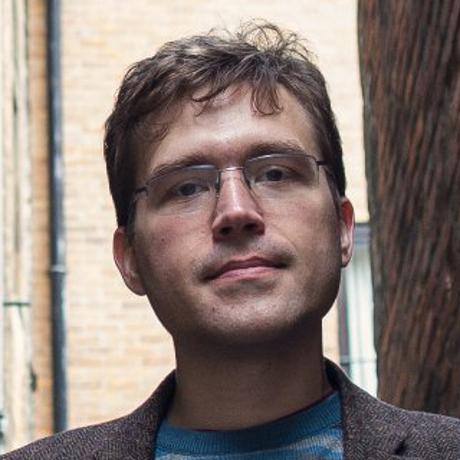
As a Visiting Assistant Professor at the University of Southern California (USC) and a Visiting Researcher at the Information Sciences Institute (ISI), my research focuses on developing innovative federated training protocols and exploring the applications of machine learning for scientific concept discovery. I am also committed to ethical and responsible AI, which is reflected in my critical examination of AI safety, model robustness, and methods for neural network interpretability.
In my current role, I leverage my background in physics and machine learning to investigate fundamental aspects of machine learning models’ learning processes. To give some examples, below I showcase three recentrly completed projects.
- Data-Efficient Augmentation of Large Language Models. My team explored the challenges inherent to Large Language Models (LLMs) like GPT-4, particularly their propensity for hallucinations, logic mistakes, and incorrect conclusions when answering complex questions. Our findings reveal a non-linear relationship between the context’s relevancy and the answers’ measured quality. A draft of our paper is available at https://arxiv.org/abs/2312.07069.
- Research on novel protocols for federated learning. In this project, I focus on improving the quality of federated training procedures in a limit of a non-IID data distribution and with a presence of honest-but-forgetful participants. Through the development of an elastic-weight consolidation schema, my team and I demonstrated improved accuracy compared to a baseline approach that simply ignores corrupted updates. Through this work, my research aims to understand the fundamental aspects of machine learning models’ learning processes, including how knowledge is stored and combined, and how to efficiently learn from noisy or partially corrupted examples. A pre-print describing this work is available at arXiv.
- Research on generalization in deep learning. In 2020-2022, I directed a research group of five members. Our goal was to investigate how neural networks acquire knowledge from training examples and generalize that knowledge to handle out-of-distribution cases. Our work was recognized in a submission to the Characteristic Science Applications effort of the NSF’s Leadership Class Computing Facility (LCCF) program, reaching the final round of the competition and outperforming 125 other applications. We published this work in the Frontiers in Materials journal, article in the Frontiers in Materials journal.
- Research on scientific knowledge discovery using machine learning. Another one of my projects was completed in collaboration with Sandia National Laboratory. In response to the needs of our research partners, I proposed a self-supervised learning schema to determine how changes in process parameters influence the final outcome of a physical vapor deposition process. This work has a potential broad implications both in the materials science research and in the industry, as it allows to optimize manufacturing processes of functional materials synthesis. Our research was recognized with a sponsored research award from the Department of Energy. We have recently published our results in the prestigious npj Computational Materials (a Nature-partner journal).
To learn more about my work history, check the Work Experience tab or visit the CV section.